
The gold was in the ditch
Your listing archive is content you have already paid for: professional photos, a story and a reason to post, collected while you were doing your actual job.
On 24 January 1848, James Marshall was building a sawmill for John Sutter at Coloma, on California's American River. The ditch that carried water away from the mill wheel was too shallow, so his crew spent weeks digging it deeper. That morning Marshall spotted something shiny at the bottom. It was gold. Within a year the California Gold Rush was under way. And the sawmill? Everyone suddenly had better things to do, and it was never used the way it was meant to be. History does not record how many planks it cut.
Marshall wasn't looking for gold. He found it because he was doing his job. That is exactly your situation. For every listing you book a photographer, write a description, measure the rooms and learn the story behind the house: why the owners are moving, where the sun hits the terrace at five, which neighbour is a little too fond of his leaf blower. Then the house sells, and all of it disappears into a folder. You've been sitting on a content goldmine this whole time, you just didn't know it.
Other industries would kill for this problem. An accountant has to make tax deadlines look exciting. A plumber photographs a pipe, and next week another pipe. A dentist cannot post last week's root canal, at least not twice. You get a professionally photographed home, a location and a reason to post with every single listing, without lifting a finger.
Every listing delivers photos, a story and a reason to post as a by-product of the job, and most agents leave all of it in a folder.
Do the maths on your archive
Multiply your listings per year by your years in business and by the formats one listing can become, and the answer is usually years of posts.
Take an agency that handles 30 listings a year and has been at it for eight years. That is 240 homes, every one of them already photographed. Each home can become at least four posts: a listing video, a short reel, a photo carousel and a simple photo post. Four times 240 is 960 posts. At three posts a week, that is more than six years of content, before you have taken on a single new listing.
Fill in your own numbers. They will differ, the conclusion rarely does: the bottleneck was never the material, it was the time to turn it into posts.
And the audience for that archive is closer than you think. According to the 2024 Profile of Home Buyers and Sellers by the National Association of Realtors, 66% of sellers used an agent who was referred to them or one they had worked with before. Those people do not browse portals. They scroll their feed, between holiday photos and a cousin's sourdough. An old listing in that feed is a quiet reminder: this agency sold the house on the corner, and it looked great.
A modest agency archive easily holds hundreds of posts, aimed at exactly the past clients and neighbours who bring in the next listing.
Five ways to dig it up
An old listing does not have to pretend to be new: it works best as proof, as a story or as a look back.
- The fresh vein: every new listing. A video, a reel and a carousel the day it goes live. This is the part most agents already do, sometimes.
- Just sold. "Sold in 12 days" with the carousel of the home. Buyers scroll past it, the next seller reads it twice.
- The throwback. A home from three years ago: "Remember this one?" Perfect for quiet weeks, which in real estate are called August.
- The year in review. December is around the corner. One video or carousel with every home you sold this year. Disney has been re-releasing Snow White since 1944; your homes of this year deserve at least one encore.
- The street story. "Our fourth home on this street." Pair a new listing with the homes you sold nearby before. It proves you know the area without you having to say so.

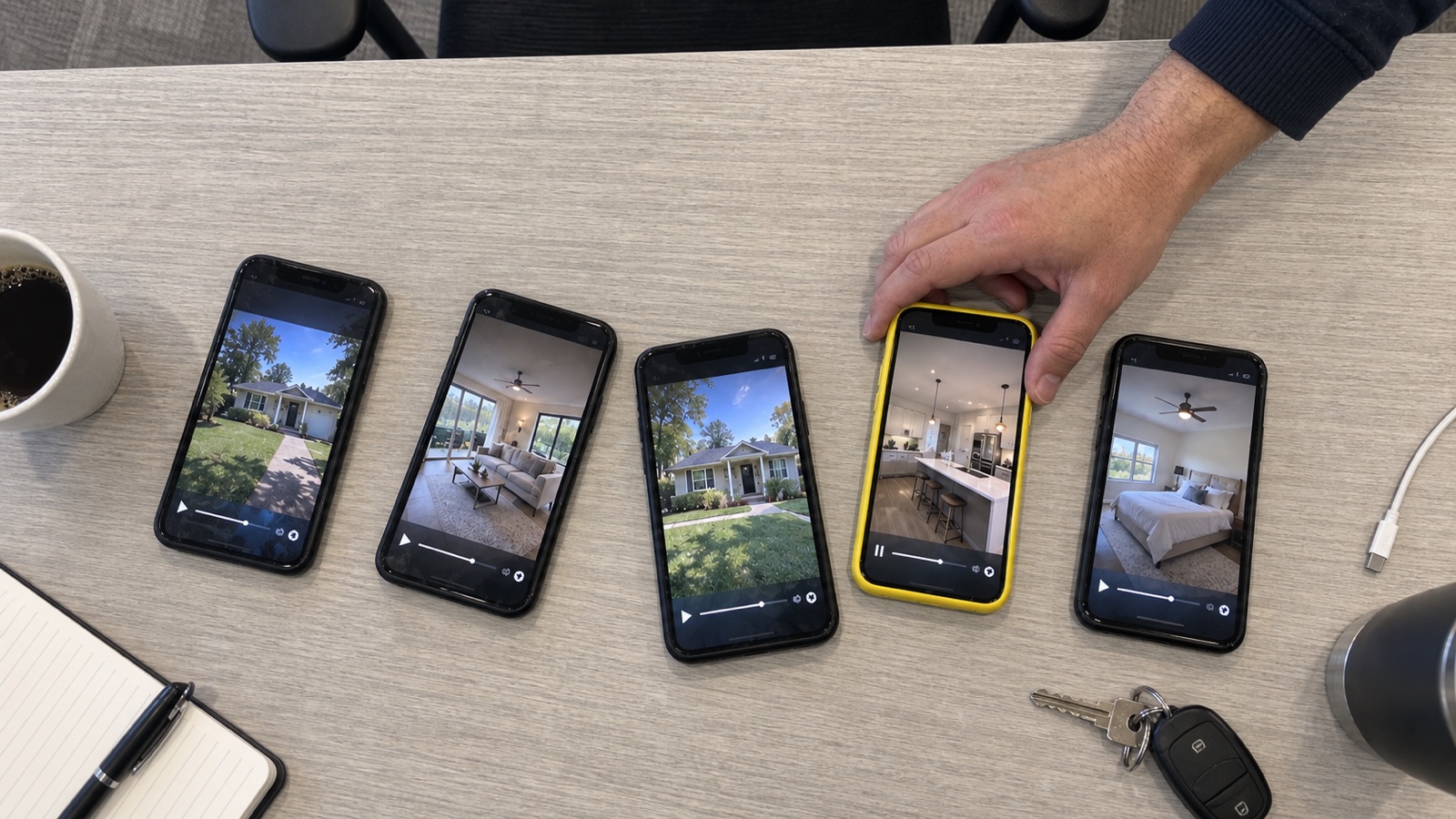
Before you sigh: this is not a second job on top of your first one. The only extra work an agent actually wants is more homes to sell or rent out. The rest can go. In Nanopixo every listing becomes a video, a reel and a carousel automatically, with script, voice-over, music and subtitles in your languages, scheduled on your channels. You check, you approve, you go back to your viewings.
Old listings come in two ways: upload the photos yourself, or import them straight from your CRM, the software where your agency keeps its listings. Zabun, Whise and Street are connected today, and we are happy to connect others: just ask. And yes, posting is free, even without a plan.
New listings, just-sold posts, throwbacks, a year in review and street stories all come out of the same archive, and Nanopixo turns each listing into a video, reel and carousel.
Check this before you post an old home
An old listing is someone else's home now, so post it as a sold reference, with photos you are allowed to use.
- Say it is sold. A 2021 home presented as available is not a throwback, it is a misleading ad. Label it "sold" and the problem is gone. Nanopixo can mark a post as sold in one click.
- Somebody lives there now. Interior photos show a living room that belongs to new people. When in doubt, ask them, or keep it to the facade and the street, without the house number.
- Check the photo licence. Your photographer may have licensed the photos for the sale only. One email beforehand is cheaper than one afterwards.
- No portal watermarks. Photos downloaded from a portal often carry its logo. Use your own originals; here is why that matters.
Label old homes as sold, respect the people who live there now, check the photo licence and use clean originals.
Conclusion
James Marshall found gold because he was digging anyway. You have been digging for years; all that is left is to look in the ditch.
The sawmill became a footnote, the ditch made history. Your listings work the same way: the sale is the job, the content is the bonus nobody collects. Nanopixo collects it for you: videos, photo carousels and free posts, published automatically on 6 channels, in 13 languages.
Start with one old listing this week. Your first video is free, so try it for free; the plans are on the pricing page. Dig it up.