Two kinds of AI image, one question
As an agent you now have two AI images within reach: the daytime photo turned into a dusk scene, and the empty or dated room shown furnished. Both start from a real photo of a real home, and both show something that was never photographed.
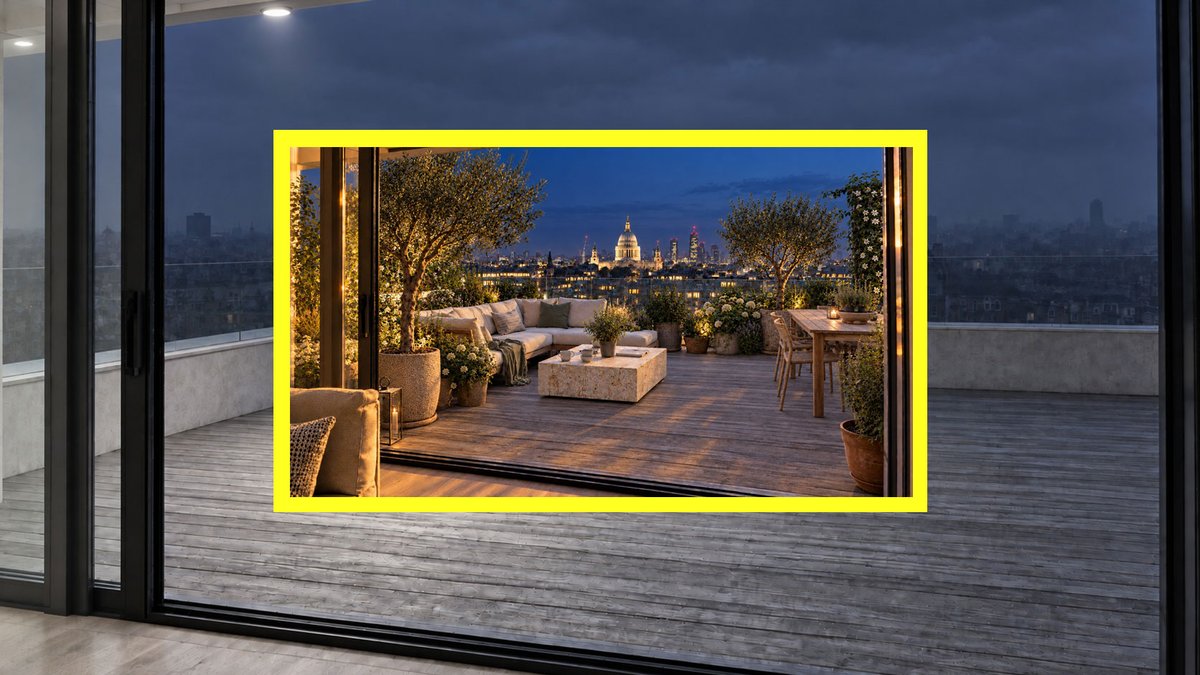
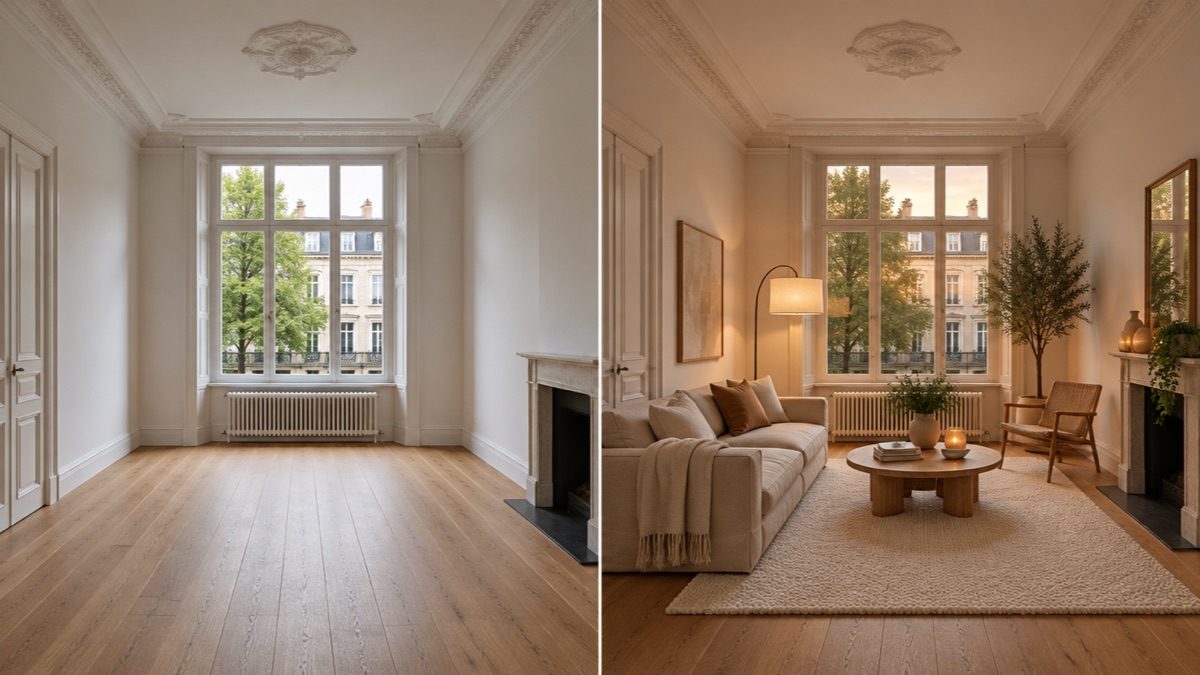
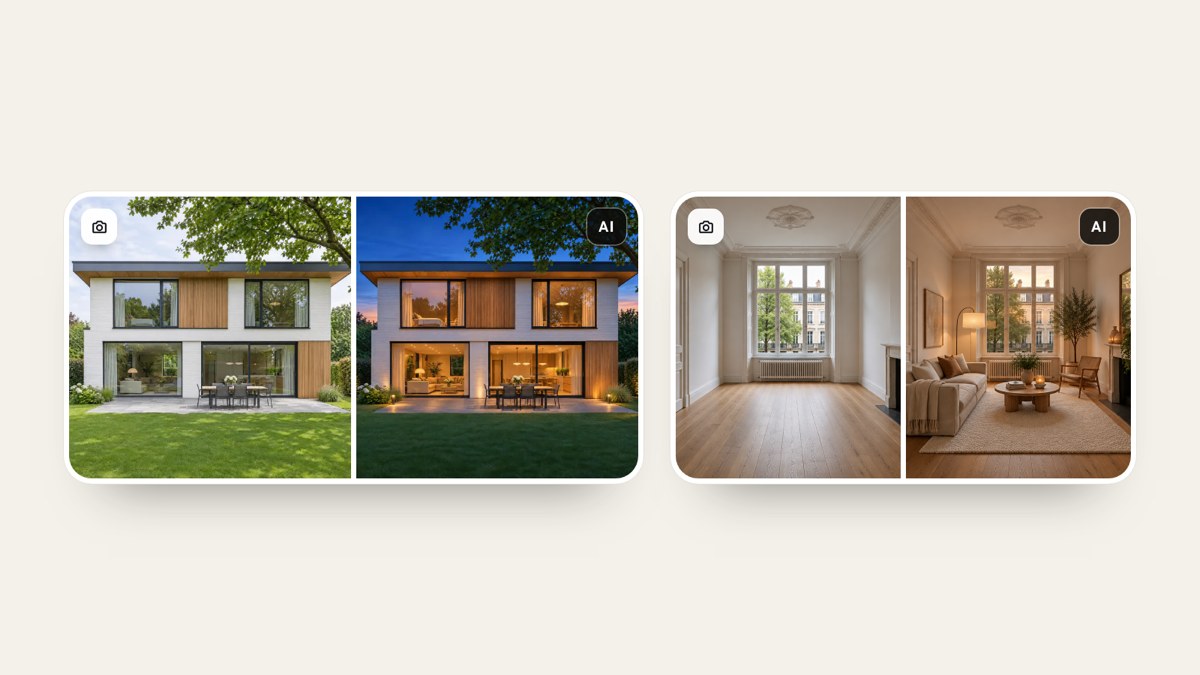
The dusk image changes the hour: the same facade, with a darker sky and lit windows. The furnished image, often called virtual staging, changes what is in the room: a sofa, a table and a rug where there is a bare floor today. A careful agent asks the same thing about both: is that allowed, and when does it mislead a buyer?
This article gives a practical answer. It builds on our overview of the EU rules for AI property content, which covers GDPR, fair representation, the energy label and the AI Act, with sources. Important: this is information and not legal advice. The rules differ from country to country, and your professional body may have rules of its own on top. Check those, and when in doubt consult a lawyer.
Mood image or changed fact: where is the line?
A mood image changes how a home feels. A changed fact changes what a buyer thinks they are buying. The first is ordinary marketing, the second is where misleading begins.
The test comes from the rules on fair commercial practices. According to the Unfair Commercial Practices Directive (2005/29/EC), a commercial practice is misleading if it contains false information, or deceives or is likely to deceive the average consumer about the main characteristics of the product, and so causes them to take a decision they would not otherwise have taken. In short: flattering is allowed, misleading is not.
For a home, think of everything a buyer pays for: the rooms and their size, the light, the view, the state of the building, what stands next door. So ask one question of every AI image: would a buyer who comes to visit be surprised by something the image told them?
A dusk scene passes that test when the home stays the same home: every buyer knows the sun goes down. It fails when the evening version removes the pylon behind the garden or lights up a terrace that does not exist. A furnished room passes when the room stays the same room: the same walls, the same windows, the same floor area, with furniture a buyer could really put there. It fails when the sofa only fits because the room was stretched, or when the new look makes a crack, a damp patch or a worn floor disappear.
Why the label matters
A label tells the viewer what they are looking at: an impression made with AI, not a photograph. That is transparency towards the viewer, and it keeps the image fair as a representation of what is for sale.
Without a label, a furnished image reads as a photo, and the viewer assumes the home looks like that today. With a label, the same image reads as a suggestion: this is how the room could look. The image has not changed, what it claims has.
Transparency about AI is also written into the European rules. According to Article 50 of the AI Act, the transparency obligations apply from 2 August 2026: providers of generative AI systems must mark their output in a machine-readable format as artificially generated or manipulated, and whoever disseminates a "deep fake", an image, audio or video that imitates a real person or place, must disclose that the content has been artificially generated or manipulated. Whether one particular image of a home falls under that definition is a question for a lawyer. The practical answer is the same in both cases: say that it is AI.
Two limits. A label does not repair a misleading image: a view that is not there stays misleading, even with "AI" written on it. And a label has to be seen: put it on the image itself and repeat it in the caption, because images get shared without their text.
What you may change, and what you never touch
Change the light and the furnishing. Leave everything a buyer measures, inspects or sees when looking outside exactly as it is.
Fine, as long as it is labelled:
- The hour and the light. Dusk, lit windows, a warmer sky.
- Furniture and decoration in a room. Loose things a buyer could put there themselves, at a believable scale.
- One possible layout. Shown as a suggestion, not as the current state.
Never, with or without a label:
- Structure. No walls moved or taken out, no extra window, no higher ceiling, no different floor plan.
- Size. No stretched rooms, no wider garden, no shrunken furniture to make a room look bigger.
- Views. What you see through the window stays what is there.
- Surroundings. Neighbouring buildings, the street, masts and cables, the building site next door: all of it stays.
- Defects. Cracks, damp, a worn roof or a stained ceiling are not retouched away.
- Fixed finishes that are not there. A new kitchen, bathroom or floor is not furnishing, it is a renovation the buyer still has to pay for.
And keep the original photo next to it. Post the AI image together with the real photo, or make sure the real photos are one tap away, in the same post or in the listing. A buyer who can compare the two knows what is real, and afterwards you can show exactly what you published and what it was based on. One more reason to keep your originals somewhere you can find them.
What Nanopixo does with AI images
Nanopixo makes these images as ready-made social posts for a home, and builds the label, the comparison and the fallback into them.
First this: it is our own product, so hold it to the same standard as any other tool. Among the posts Nanopixo prepares for a home, three kinds use AI: "At dusk", "See it furnished", which shows a room furnished in a furnishing style you choose, and "One change", which shows the room as it is next to the same room with one thing changed. Every home's plan includes one AI post. This is what happens around them:
- The image is labelled. The label is part of the image itself: "Dusk impression · AI" on a dusk image, and "Virtually furnished · AI" or "One change · AI" on the AI half of an image that shows the room as it is next to the AI version. You can reword the label, but the AI mark stays on it.
- The caption says it too. Nanopixo adds a fixed line to the caption that says what the AI part is: for a furnished room, for example, that the furniture shown is not included and the home is offered as it is.
- You can compare with the original photo.
- You can report an image that looks wrong.
- There is a fallback. When an AI image does not work out, the post falls back to one made from the real photos.
- Nothing goes online until you say so. Each post can still be changed, skipped or stopped until it goes live.
The label and the fallback do not replace your own eye. You know the home, the tool does not: hold every AI image next to the real room before it goes out, and report or drop an image that adds, hides or resizes anything. More on how these posts work is on the AI posts page.
Conclusion
Yes, you may post an AI image of a home, when it changes the mood and not the facts, says clearly that it is AI, and stands next to the real photo.
That is three checks, and they cost you less than a minute per image: is the home still the same home, is the label on the image and in the caption, and can the viewer get to the original photo. If one fails, post the real photo. And for anything beyond that, the rules of your country and of your professional body come first.
See what these posts look like on the AI posts page, or try it for free.